World Type Archive · Tropical Planetary Environments

Jungle Worlds

Jungle worlds are living planets shaped by heat, rainfall, and relentless biological competition—vast green environments where forests can cover entire continents and civilization must adapt to the canopy.

World TypeDense BiospheresTropical FrontiersLore Index

Overview

Rainforest WorldsHigh BiodiversityWarm ClimatesCanopy Civilizations

Jungle worlds are terrestrial planets where warm temperatures, abundant moisture, and powerful biological cycles allow dense vegetation to dominate much of the surface. Their forests may stretch from coast to coast, rise in layered canopies hundreds of meters deep, or reclaim cleared land within a few growing seasons.

These planets are often rich in oxygen, food, medicine, biological compounds, and renewable materials. Yet abundance does not make them easy to settle. Thick humidity, poisonous organisms, aggressive predators, unfamiliar diseases, rapid decay, and difficult terrain can turn even a breathable world into a dangerous frontier.

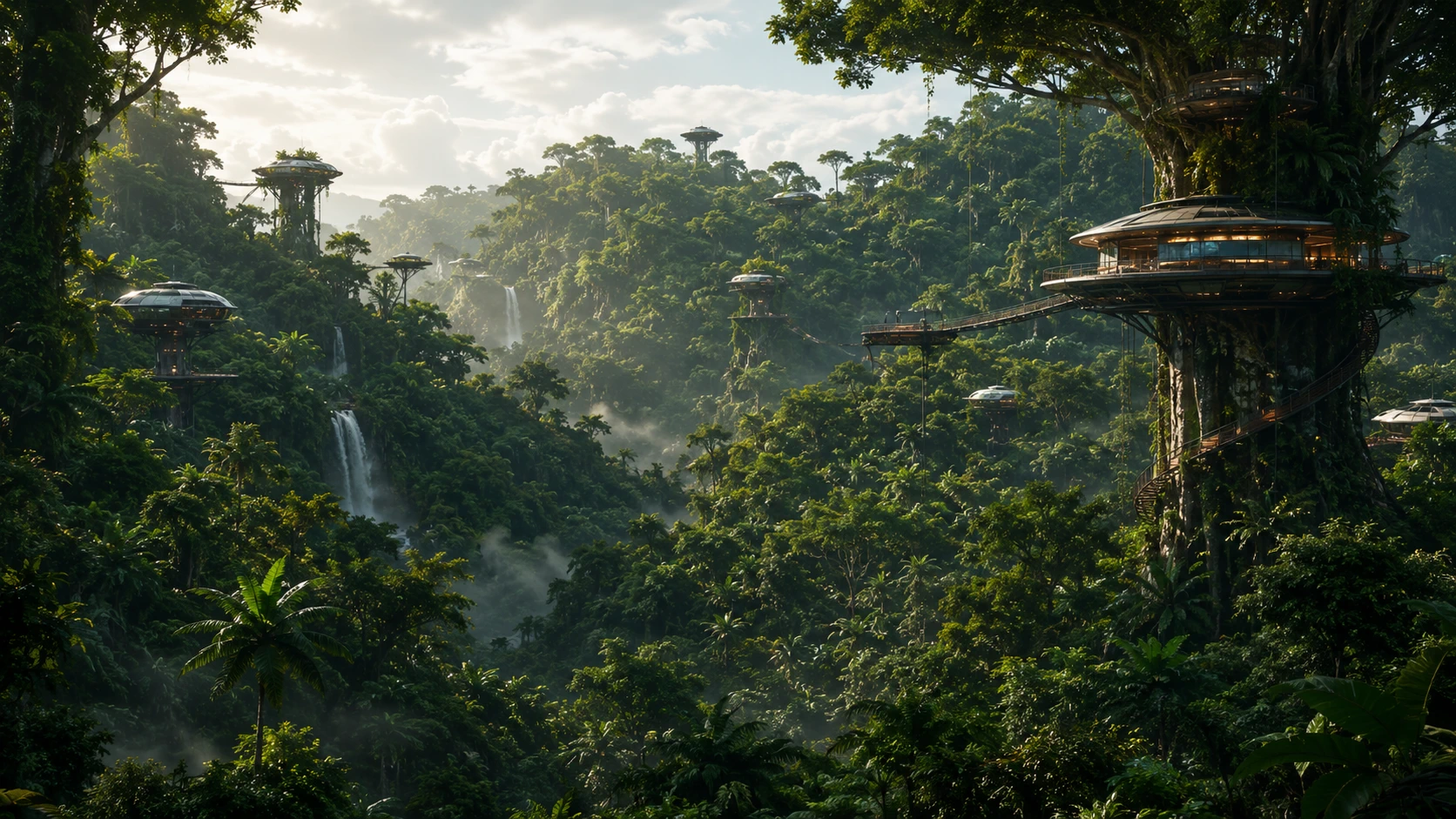
Human settlements therefore grow upward, along rivers, or inside carefully managed clearings. Elevated platforms, canopy roads, sealed research stations, aerial transit, and tree-integrated architecture allow civilization to exist without attempting to overpower an ecosystem that is larger, older, and faster-growing than any city.
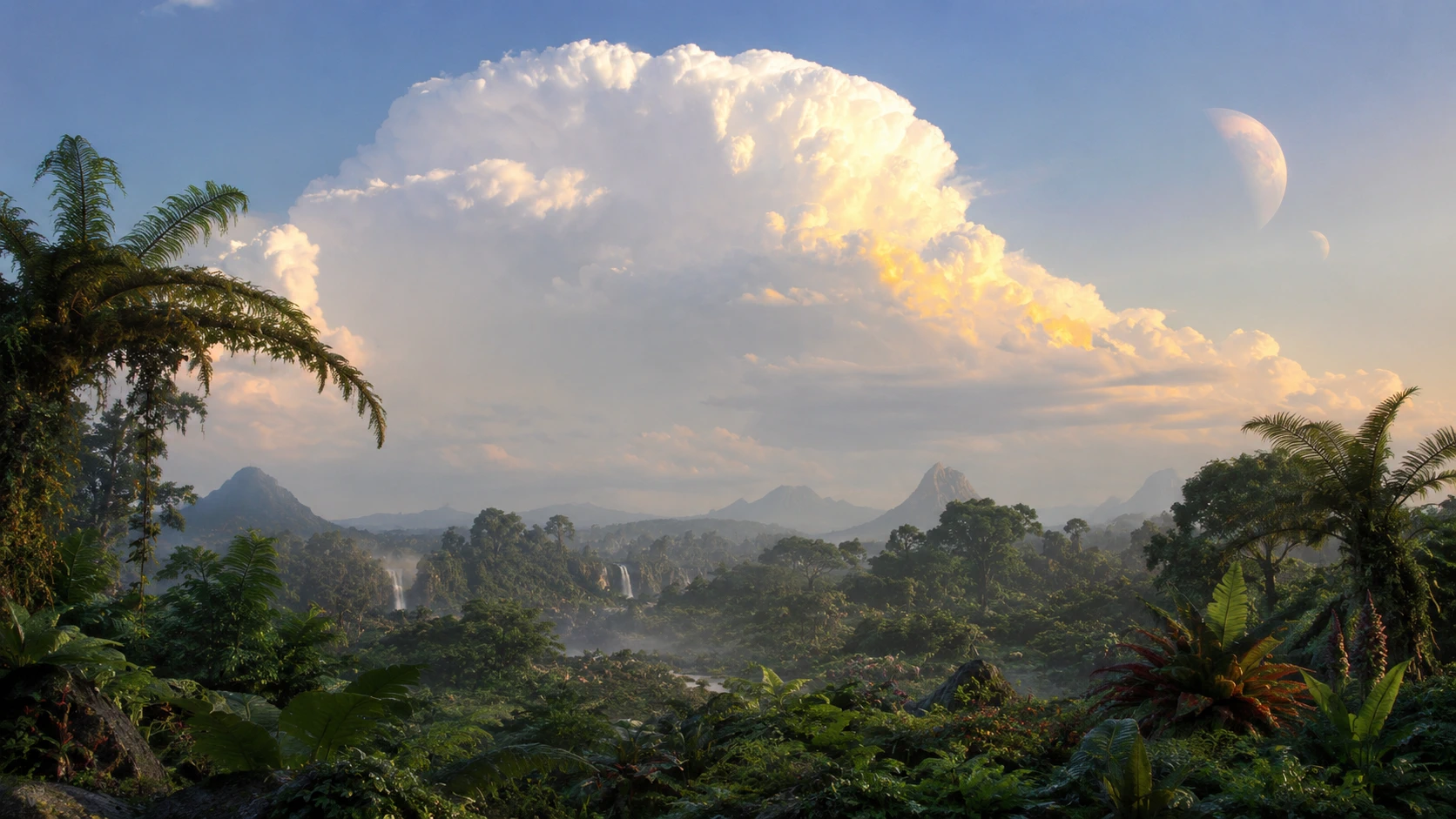
Alien jungle beneath towering clouds and distant moons
Planetary Rainforest ClassWarm air, deep moisture cycles, and immense biological diversity create worlds dominated by living landscapes.

Worlds That Never Stop Growing

Life in Every Layer

On a mature jungle world, the forest is not a single environment but a vertical network of habitats. Dark ground layers support fungi, scavengers, and root systems, while the upper canopy holds flowering plants, gliding predators, aerial nests, and entire food chains that may never touch the surface.

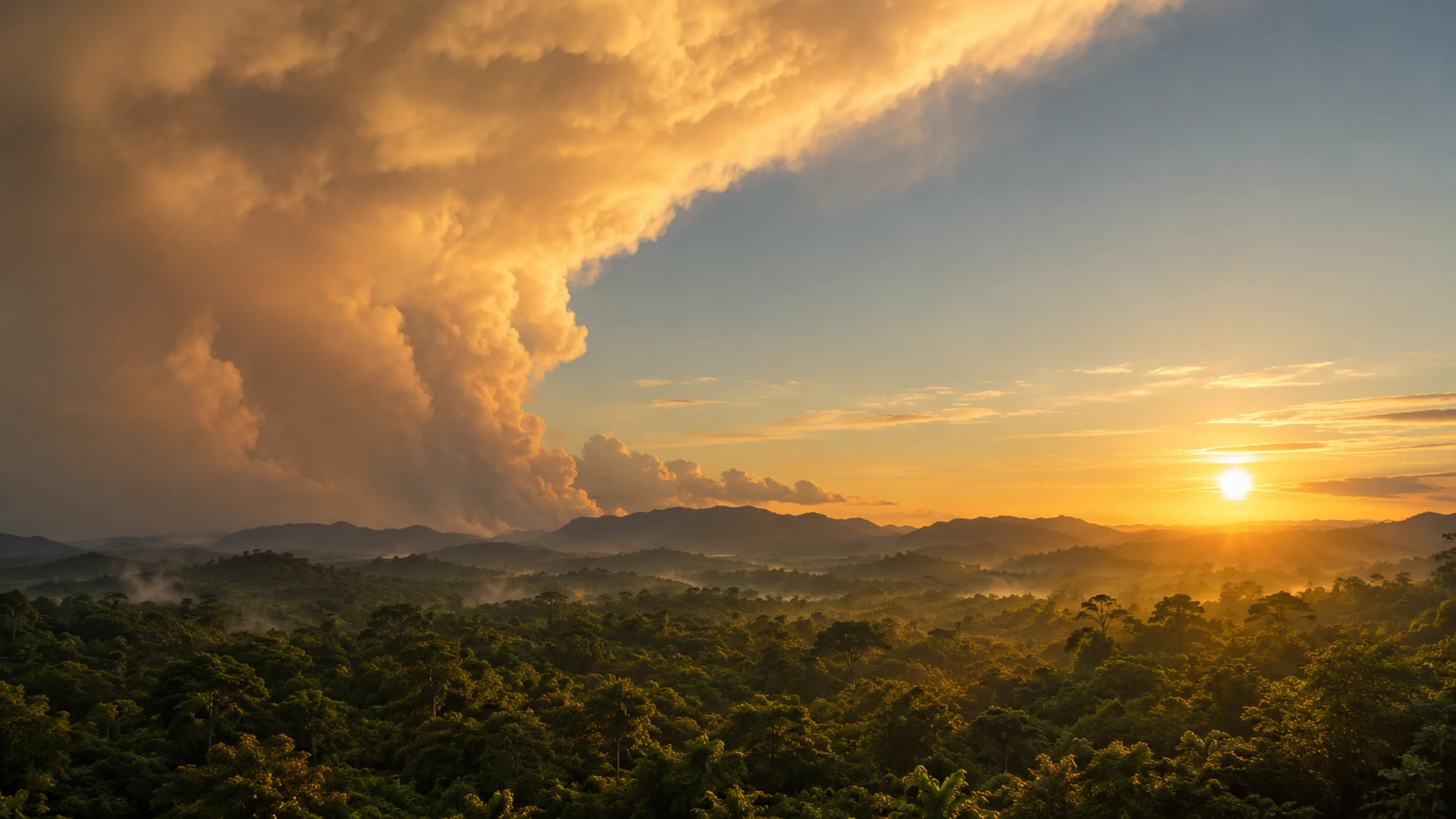
Rainfall and evaporation continually recycle water through the atmosphere. Rivers split into broad wetlands, mist gathers around mountain forests, and towering storm systems redistribute heat across the planet. Biological activity can influence cloud formation, regional weather, and even the chemistry of the air.

For settlers, the central challenge is not creating life but finding space within it. Roads disappear beneath vegetation, exposed machinery corrodes, and invasive local organisms can enter buildings, vehicles, and agricultural systems unless infrastructure is constantly maintained.

Green Worlds From Space

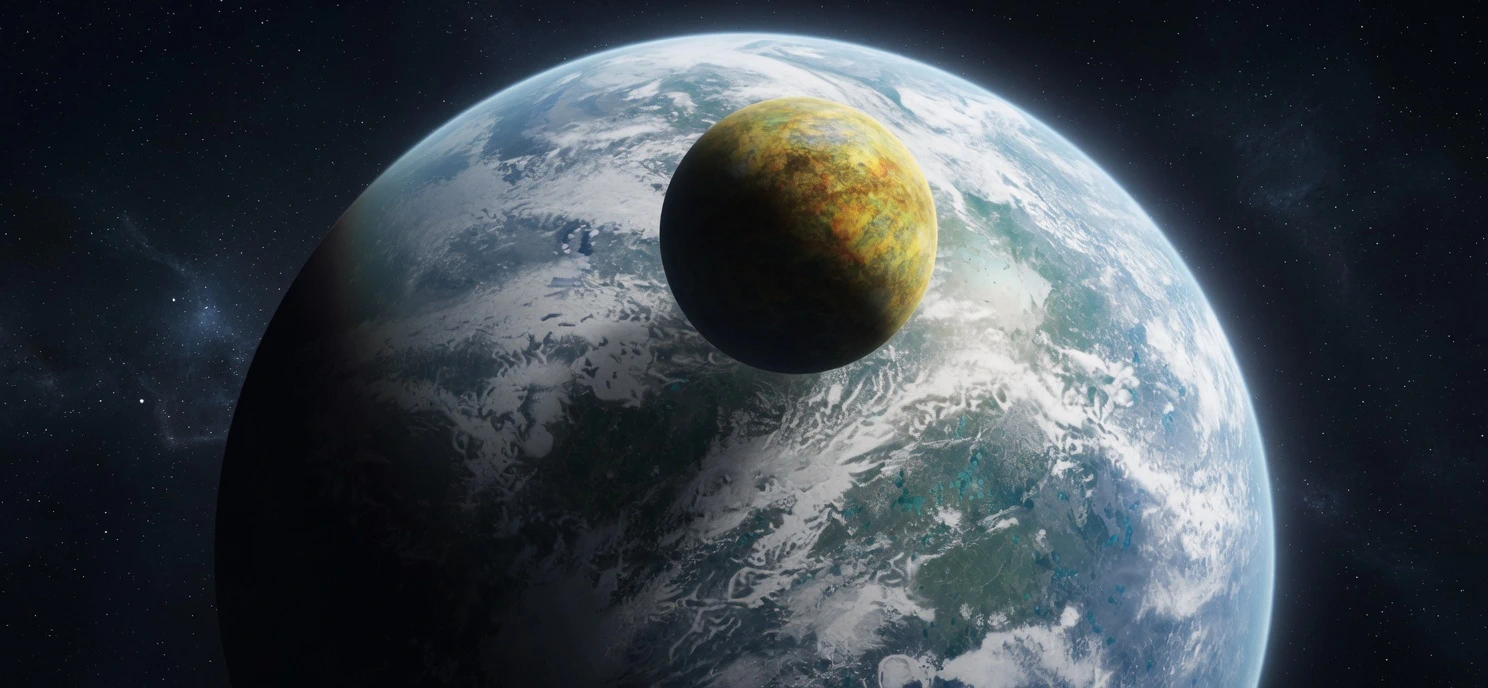
Jungle moon passing before a cloud-covered habitable planet

Biospheres Visible From Orbit

Cloud belts, broad green continents, inland seas, and seasonal storm tracks reveal the immense scale of jungle biospheres. Some systems support more than one biologically active world or moon, creating closely linked ecological archives.

Explore Habitable Worlds

Major Jungle World Types

1

Temperate Rainforest Worlds

Mild climates and reliable rainfall support immense forests without the most severe heat, humidity, or disease pressure found on tropical planets.

2

Tropical Jungle Worlds

Hot, wet planets where dense vegetation, rapid growth, powerful storms, and extreme biodiversity dominate most habitable land.

3

Predator-Dominated Worlds

Breathable environments whose ecosystems contain territorial megafauna, aerial hunters, toxins, parasites, or diseases that restrict settlement.

4

Canopy Settlement Worlds

Civilization develops above the forest floor through elevated cities, suspended transit, tree-integrated habitats, and aerial infrastructure.

Civilization Above the Forest Floor

Building With the Canopy

Large jungle settlements rarely begin by clearing the forest completely. Instead, they occupy ridges, river junctions, giant trees, and elevated platforms where airflow is better and the most dangerous ground-dwelling organisms are easier to control.

Canopy cities connect through suspended walkways, aerial trams, enclosed bridges, and compact landing platforms. Their architecture must flex with living supports, resist constant moisture, and allow the surrounding ecosystem to continue moving beneath and around the settlement.

Futuristic elevated settlement integrated into giant jungle trees
Canopy SettlementElevated habitats reduce ecological disruption while protecting residents from the dangers of the forest floor.

Jungle World Examples

Life Beneath the Canopy

Jungle worlds force civilization to negotiate with life rather than simply occupy empty terrain. Every settlement becomes part of a larger ecosystem, and every expansion risks disrupting food chains, water cycles, migration routes, or organisms that have not yet been studied.

The most successful societies treat biological knowledge as essential infrastructure. Disease monitoring, ecological mapping, controlled clearings, aerial transit, corrosion-resistant materials, and strict quarantine systems matter as much as roads, power, and communications.

Across the Darknovus archive, Maze represents a jungle world transformed into a symbol of freedom; Parrish shows the hardships of an oppressive biosphere; Alanaterra reveals the danger of dominant predators; and Kaelis demonstrates how a humid forest planet can become a major center of trade and resource development.

Elevated habitats woven through a vast jungle canopy
Living With the ForestSuccessful jungle civilizations adapt their architecture, transport, and culture to the biosphere rather than attempting to erase it.