Cosmopedia · Technology

Jump Space

The alternate space that makes interstellar travel practical, reducing journeys between stars from years to weeks or days.

Overview

Jump Space is the alternate spatial medium that makes practical interstellar travel possible in the Darknovus setting. Ships entering it remain limited to sub-light movement, but the effective distance between stars is radically reduced, allowing journeys that would take years in normal space to be completed in weeks or even days.

A vessel can only enter Jump Space through a stabilized Jumpgate. The gate forms a temporary bridge between normal space and the alternate geometry of the jump corridor, allowing a ship to pass through without needing to generate the entire field on its own.

Jump Space is not an empty shortcut. It is treated as a navigable but dangerous transit environment, requiring careful route calculation, stable entry vectors, and strict coordination between ships and stations.
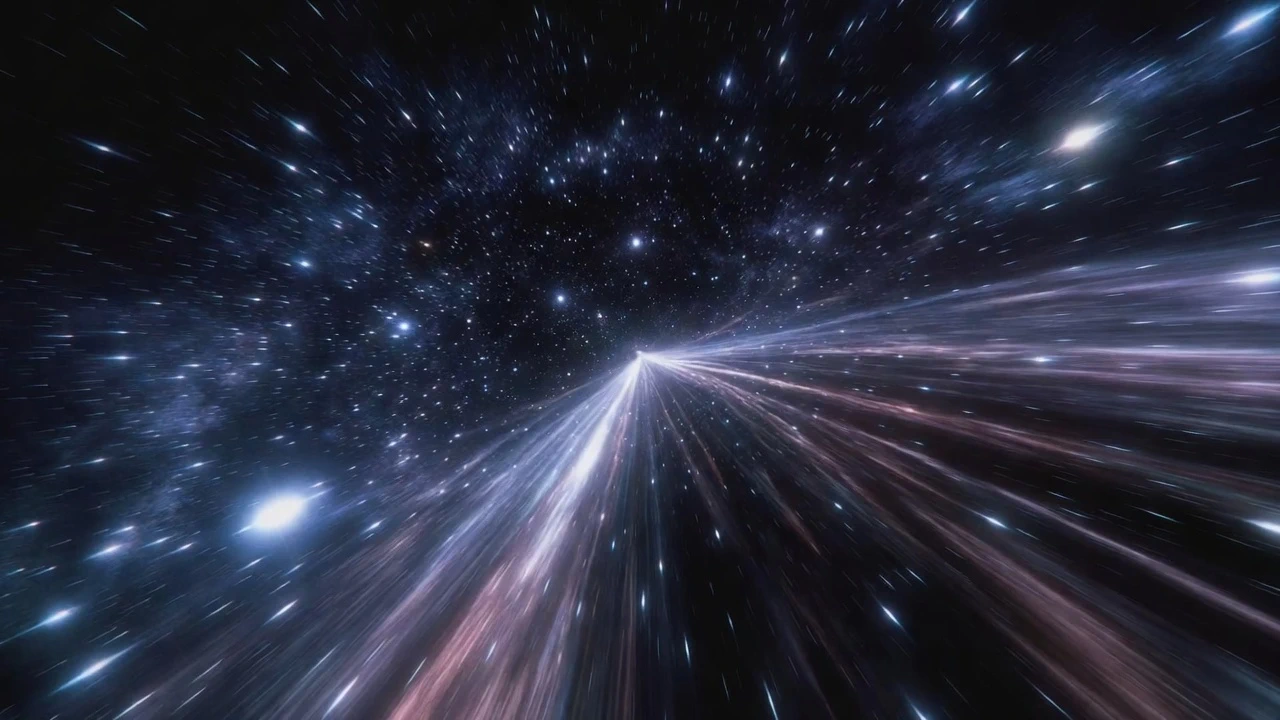
Entering Jump Space

To enter Jump Space, a ship must pass through a powered Jumpgate at the correct velocity, angle, and field synchronization. The gate does not throw the vessel across space; instead, it opens a passage into a region where the route between two points is dramatically shortened.

Navigation inside Jump Space depends on pre-charted corridors and constantly updated station data. Routes between heavily settled systems are comparatively safe because they are measured, monitored, and used frequently. Frontier routes are far more uncertain, especially where few ships have returned with updated telemetry.

The difference between Short-Distance and Long-Distance Jumps is one of scale, risk, and infrastructure. Short-Distance Jumps usually cover less than 50 light years and connect the Inner Sphere. Long-Distance Jumps reach much farther but require greater energy, more precise calculations, and larger station facilities.

Archive classification: Technology record · Alternate transit medium · Jumpgate-dependent travel.

Long-Distance and Short-Distance Travel

Jump Space determines the shape of human civilization. Regions connected by frequent short jumps can remain politically and economically close, while regions requiring long jumps become more remote, slower to communicate with, and more culturally distinct.

The technology also explains why distance still matters. Jump Space reduces travel time, but it does not erase geography. Energy costs, gate capacity, route stability, and station availability all determine whether a settlement is part of the connected core or isolated on the frontier.

For explorers, Jump Space is both a pathway and a barrier. It opens the galaxy, but only along routes that can be calculated and survived. Beyond mapped corridors, every jump carries greater uncertainty.